
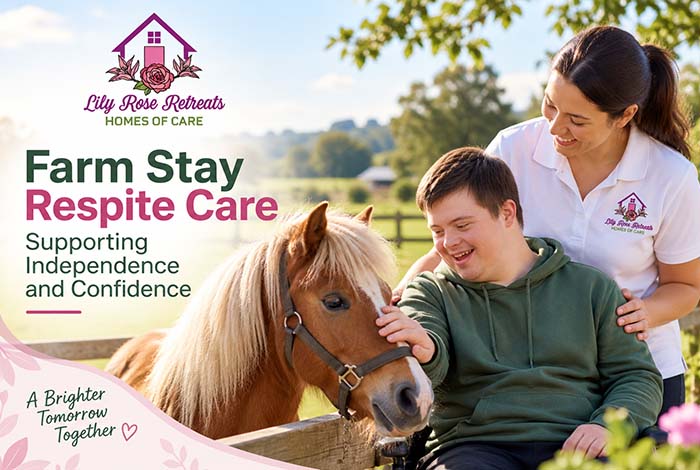
How Farm Stay Respite Care Supports Independence and Confidence
Blog

How Farm Stay Respite Care Supports Independence and Confidence

By Lily Rose 8 min read

How Farm Stay Respite Care Supports Independence and Confidence


Blog


September 13, 2026

For many NDIS participants, respite care can be more than simply spending time away from home. The right environment can offer opportunities to try new experiences, make everyday choices and become more involved in daily routines.

Farm stay respite care combines personalised support with a peaceful rural environment. At Lily Rose Retreats in Traveston, Queensland, participants can enjoy nature, open spaces and farm experiences while receiving support based on their individual needs and preferences.

Key Points

  • Farm stays can support independence and confidence.
  • Participants can practise everyday living skills.
  • Nature and animals provide meaningful experiences.
  • Support can be tailored to individual needs.
  • Respite also gives families and carers time to recharge.

What Is Farm Stay Respite Care?

Farm stay respite care provides short-term support in a peaceful rural or farm-style environment.

Participants can enjoy a change from their usual surroundings while receiving assistance with daily routines, personal needs and suitable activities.

Unlike a conventional stay, a farm environment can also offer access to nature, animals and open spaces.

How Can Farm Stay Respite Care Support Independence?

Independence means different things to different people. It does not necessarily mean completing every task without support.

For some participants, independence may involve making more choices, taking part in daily routines or communicating what they want to do.

Everyday Opportunities for Independence

During a farm stay, participants may be encouraged to:

  • Choose preferred activities
  • Help with simple daily tasks
  • Make decisions about their routine
  • Organise personal belongings
  • Communicate their needs and preferences

Small opportunities like these can help participants become more involved in their own day.

Building Confidence Through New Experiences

Trying something unfamiliar can be an important part of developing confidence.

A calm farm environment can give participants opportunities to explore new experiences without unnecessary pressure.

This might include spending time around animals, exploring outdoor spaces or participating in an activity they have not tried before.

Learning at an Individual Pace

Not everyone feels comfortable with a new activity immediately.

Some participants may want to become involved straight away, while others may prefer to watch first. Support should allow each person to participate at a pace that feels comfortable.

Practising Everyday Living Skills

Everyday routines can provide natural opportunities to develop practical skills.

Instead of turning the stay into a formal learning program, participants can practise these skills as part of normal daily life.

Examples may include:

  • Getting ready for the day
  • Choosing meals
  • Helping with simple meal preparation
  • Organising belongings
  • Participating in household routines

The amount of assistance provided should reflect the participant’s individual support needs.

Why Choice and Control Matter

Having opportunities to make decisions can help participants feel more involved and confident.

Even simple choices—such as deciding between two activities or choosing how to spend the afternoon—can encourage greater participation.

Support should respect the participant’s preferences rather than expecting everyone to follow the same routine.

Connecting With Animals

For participants who enjoy animals, a farm stay can provide meaningful opportunities for interaction.

Depending on the participant and what is appropriate, they may enjoy observing animals, spending time near them or becoming involved in simple animal-related activities.

What Can Animal Activities Encourage?

Suitable animal experiences may encourage:

  • Confidence
  • Patience
  • Responsibility
  • Communication
  • Engagement

Direct interaction should always depend on the participant’s interests, comfort and support requirements.

Spending Time in Nature

Open spaces and natural surroundings are another important part of the farm stay experience.

Participants may enjoy walking outdoors, relaxing in the fresh air, observing animals or simply spending quiet time away from busy surroundings.

For people who prefer a slower and more peaceful environment, this can make the respite experience particularly enjoyable.

Supporting Communication Skills

Independence is not only about physical activities. Being able to express preferences and communicate needs can also be important.

During respite, participants may have opportunities to practise communicating with support staff outside their normal home environment.

This may involve:

  • Asking for assistance
  • Expressing preferences
  • Choosing activities
  • Saying yes or no to an activity
  • Communicating personal needs

Small improvements in communication can make everyday decision-making easier.

Maintaining Familiar Routines

Being somewhere new does not mean familiar routines need to disappear.

Understanding a participant’s normal routine can help make the transition to respite more comfortable.

Before a stay, it can be useful to discuss:

  • Daily routines
  • Food preferences
  • Communication needs
  • Personal care requirements
  • Favourite activities
  • Individual support needs

This information can help support staff provide a more personalised experience.

Balancing Routine With New Experiences

A good respite experience can combine familiar routines with opportunities to try something different.

For example, a participant might follow their usual morning routine and then spend part of the afternoon enjoying a new farm or outdoor activity.

This balance can provide familiarity while still creating opportunities for confidence and growth.

What Skills Can Farm Stay Respite Care Support?

The skills practised during respite will depend on the individual participant and their needs.

Skill Area Possible Opportunities
Decision-making Choosing activities and routines
Communication Expressing needs and preferences
Daily living Participating in everyday tasks
Social skills Communicating and engaging with others
Responsibility Taking part in suitable activities
Confidence Trying new experiences with support

Not every activity needs to focus on skill development. Participants should also have plenty of opportunities to simply relax and enjoy their stay.

Why Personalised Support Is Important

Every participant has different abilities, preferences and routines.

One person may enjoy an active day outdoors, while another may prefer quiet activities and a predictable schedule.

Personalised support allows the respite experience to be shaped around the individual rather than expecting everyone to participate in the same way.

How Does Respite Support Families and Carers?

Respite can provide valuable time for families and carers to step away from their usual caring responsibilities.

They may use this time to rest, manage other responsibilities or spend time with other family members.

Meanwhile, the participant can enjoy their own supported experience in a different environment.

Farm Stay Respite Care in Traveston

Lily Rose Retreats is located in Traveston, Queensland, within the Gympie region.

The peaceful rural environment provides an alternative to busy urban surroundings and may particularly appeal to participants who enjoy nature, animals and open spaces.

Participants can experience a change of routine while receiving personalised support throughout their stay.

Who May Enjoy a Farm Stay?

A farm stay respite experience may suit participants who:

  • Enjoy nature and animals
  • Prefer quieter surroundings
  • Like spending time outdoors
  • Want a change from their normal routine
  • Enjoy trying new activities
  • Want opportunities to practise independence

Every participant is different, so individual support requirements and suitability should be discussed before arranging a stay.

How to Prepare for a Farm Stay

Good preparation can make a new environment feel more comfortable.

Families and participants can share information about routines, interests, communication preferences and support requirements before the stay.

Bring Familiar Items

Personal belongings can help make an unfamiliar environment feel more comfortable.

Depending on the participant, this might include favourite clothing, entertainment or other familiar items.

Discuss Important Routines

If a participant has particular routines that help them feel comfortable, these should be discussed beforehand.

This makes it easier to provide consistent and personalised support during the stay.

Small Achievements Can Build Confidence

Developing independence often happens through small everyday experiences rather than one major achievement.

Choosing an activity, asking for help, participating in a new task or feeling comfortable away from home can all represent meaningful progress.

The important thing is allowing participants to explore these experiences with appropriate support and without unnecessary pressure.

Farm Stay Respite Care vs Traditional Respite

Both types of respite can provide valuable short-term support, but the environment and experience may differ.

Farm Stay Respite Care Traditional Respite
Rural farm-style environment May be residential or community based
Access to nature and open spaces Environment varies by provider
Opportunities for suitable farm experiences Activities depend on the service
Relaxed change of surroundings May follow a more conventional setting
Personalised routines and activities Support model varies

The best option depends on the participant’s preferences, needs and circumstances.

Choosing the Right Respite Experience

When considering respite, the environment is only one part of the decision.

Families should also consider the participant’s support requirements, routines, interests, communication needs and comfort with unfamiliar surroundings.

Questions to Consider

Before arranging a stay, consider:

  • What type of environment does the participant enjoy?
  • What support will they need?
  • Are there routines that should be maintained?
  • What activities do they enjoy?
  • How do they communicate their preferences?

Discussing these points beforehand can help determine whether a farm stay is appropriate.

Why Choose Lily Rose Retreats?

At Lily Rose Retreats, the focus is on creating a peaceful and welcoming respite experience in a farm-style environment.

Participants can enjoy a change from their everyday surroundings while receiving personalised support based on their needs, preferences and routines.

The Traveston location also provides access to a relaxed rural setting within the Gympie region.

Frequently Asked Questions

What is farm stay respite care?

Farm stay respite care provides short-term support in a rural or farm-style environment. Participants can enjoy a change from their usual surroundings while receiving assistance based on their individual needs.

Can farm stay respite care support independence?

Farm stays can provide opportunities to make choices, practise everyday routines, communicate preferences and participate in suitable activities. The level of support depends on the individual participant.

What activities can participants do?

Activities depend on individual interests and abilities. They may include spending time outdoors, walking, enjoying nature, participating in everyday routines and suitable experiences around animals.

Does everyone have to interact with animals?

No. Participation should be based on the person’s interests and comfort. Participants can enjoy the farm environment without directly interacting with animals.

Where is Lily Rose Retreats located?

Lily Rose Retreats is located in Traveston, Queensland, within the Gympie region.

Can families and carers benefit from respite?

Yes. Respite can provide carers and families with time to rest, recharge or manage other responsibilities while the participant receives support.

How do I know if a farm stay is suitable?

Suitability depends on the participant’s individual needs, preferences and support requirements. These should be discussed before arranging a stay.

Experience Farm Stay Respite Care at Lily Rose Retreats

A respite stay can provide time to relax while also creating opportunities to experience something different, make choices and build confidence.

At Lily Rose Retreats in Traveston, participants can enjoy farm stay respite care in a peaceful rural environment with support shaped around their individual needs and routines.

Call Lily Rose Retreats on 0400 662 464 to discuss a farm stay respite experience for you or your loved one.

Category: Blog
Written by

Lily Rose

The Lily Rose Retreats team shares practical information about farm stay respite care, Supported Independent Living and personalised NDIS support in a peaceful rural setting.

LILY ROSE RETREATS

Discover Farm Stay Respite Care in Traveston

Talk with our team about personalised care that supports your needs, choices and independence.