
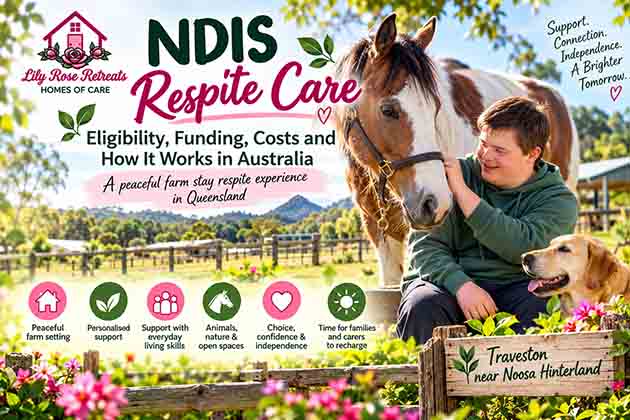
NDIS Respite Care Funding: Eligibility & Costs
NDIS Respite Care Funding: Eligibility & Costs
In Australia, this support is now commonly called short term respite, previously known as Short Term Accommodation (STA). Understanding how eligibility, funding and costs work can help participants and families make informed decisions.
Key Takeaways
- NDIS respite care supports participants and their primary informal carers.
- Eligibility depends on individual disability-related support needs.
- Short term respite may be funded for up to 28 days annually.
- Costs depend on support requirements and NDIS pricing rules.
- Farm stay respite offers a peaceful alternative for suitable participants.

What Is NDIS Respite Care?
NDIS respite care is temporary disability-related support that allows eligible participants to spend time apart from their usual informal care arrangements while their primary carers take a short break.
The purpose is to maintain sustainable caring arrangements and ensure participants continue receiving appropriate support.
Depending on individual needs, respite may include:
- Personal care and daily living assistance.
- Support with meals and everyday routines.
- Mobility and communication assistance.
- Overnight support where required.
- Suitable accommodation arrangements.
The National Disability Insurance Agency (NDIA) now uses the term short term respite instead of Short Term Accommodation to better reflect the purpose of this support.
You can read more in the official NDIS explanation of short term respite.
Who Is Eligible for NDIS Respite Care?
NDIS respite care is not automatically available to every participant.
Eligibility depends on the participant’s disability-related support requirements and whether temporary support is necessary to sustain their primary informal care arrangements.
Who May Qualify?
Short term respite may be appropriate when:
- A participant relies on substantial assistance from a primary informal carer.
- Their usual care arrangements need temporary relief.
- The proposed respite supports ongoing informal care.
- The arrangement meets relevant NDIS funding criteria.
The NDIA considers each participant’s circumstances before determining whether funding is appropriate.
Can Adults and Children Access Respite?
Both adults and children may have respite-related support needs, but funding decisions depend on individual circumstances.
For children, the NDIA also considers ordinary parental responsibilities and what additional disability-related support is reasonable and necessary.
Families should discuss eligibility with their NDIS contact or support coordinator.
How Does NDIS Respite Care Funding Work?
NDIS respite care funding is designed to pay for eligible disability-related support during temporary changes to usual care arrangements.
The funding available depends on the participant’s needs and the supports approved under their plan.
What Can NDIS Respite Funding Cover?
Depending on the approved arrangement, it may include:
- Personal care and daily assistance.
- Disability-related support during the stay.
- Appropriate standard accommodation.
- Meals and other components included in an eligible respite support arrangement.
Funding must be used in accordance with current NDIS rules and the participant’s plan.
What Does NDIS Respite Funding Not Cover?
NDIS respite funding is not intended to cover ordinary holidays or unrelated personal expenses.
Examples of expenses that may not be funded include:
- Holiday packages.
- Tourism and recreational travel.
- Unrelated entertainment costs.
- Additional personal purchases.
A peaceful setting may be part of a suitable respite arrangement, but the funding purpose must remain disability-related support.
How Many Days of Respite Does NDIS Fund?
NDIS short term respite may be funded for up to 28 days per year, generally for no more than 14 days at a time, where the participant meets the relevant criteria.
This does not mean every participant automatically receives 28 days.
The actual amount depends on individual circumstances, support needs and approved funding.
Can Respite Be Used for Weekend Stays?
Eligible participants may be able to arrange shorter respite periods, including weekends, provided the arrangement complies with their plan and applicable guidelines.
For example, a participant may prefer occasional short stays rather than a longer continuous period.
Planning ahead helps families organise appropriate support and confirm availability.
How Much Does NDIS Respite Care Cost?
NDIS respite care costs vary depending on the support required and the applicable pricing arrangements.
There is no single price that applies to every participant or every respite arrangement.
What Affects Respite Care Costs?
Several factors influence pricing:
- Length of stay.
- Support worker requirements.
- Individual or shared support.
- Overnight assistance.
- Weekday, weekend or public holiday support.
- Applicable NDIS price limits.
The NDIA publishes official pricing information through its NDIS pricing arrangements and schedules.
Before booking, participants should request a written explanation of services, applicable charges and any out-of-pocket expenses.
What Is the Difference Between NDIS Respite Care and a Holiday?
Although respite may involve staying somewhere different, its purpose is not the same as a holiday.
| NDIS Respite Care | Holiday |
|---|---|
| Focuses on disability-related support | Focuses primarily on recreation |
| Helps sustain informal care arrangements | Usually arranged for leisure |
| Subject to NDIS eligibility and funding rules | Generally privately funded |
| Includes appropriate support services | Support may not be included |
| Must meet relevant NDIS requirements | Not automatically eligible for NDIS funding |
Participants may enjoy nature, animals or relaxing surroundings during respite, but those experiences do not automatically make an ordinary holiday an NDIS-funded support.
Benefits of NDIS Respite Care for Participants
Appropriate respite arrangements can help participants maintain routines while experiencing a different environment.
1. Continued Personalised Support
Participants can receive assistance based on their individual needs, communication preferences and everyday routines.
2. Opportunities to Build Independence
Suitable activities may encourage participants to practise daily living skills and make decisions about their routines.
3. A Change of Environment
Spending time in a different setting may offer new experiences while maintaining familiar support arrangements.
4. Social Interaction
Depending on the participant’s preferences, respite may provide opportunities for meaningful social connections.
5. Choice and Control
Participants should remain involved in decisions about where they stay, the support they receive and how they spend their time.
For more information about nature-based respite experiences, read How Farm Stay Respite Care Supports Independence and Confidence.
How Does Respite Care Help Families and Carers?
Primary informal carers often balance caring responsibilities with work, family life and personal commitments.
Respite can provide temporary relief while the participant continues receiving appropriate disability-related assistance.
Benefits for Carers
A planned respite arrangement may help carers:
- Take time to rest.
- Attend appointments.
- Manage family responsibilities.
- Maintain personal wellbeing.
- Continue providing support over the longer term.
Effective respite arrangements consider the needs of both the participant and their primary informal carers.
Why Choose Farm Stay Respite Care?
Farm stay respite care combines appropriate disability-related support with a peaceful rural environment.
For participants who enjoy the outdoors, it may provide an appealing alternative to a busy urban setting.
Peaceful Natural Surroundings
Open spaces and countryside views can create a relaxed environment for participants who prefer quieter surroundings.
Opportunities to Enjoy Animals
Farm environments may provide suitable opportunities to spend time around friendly animals, depending on participant preferences and safety considerations.
Everyday Living Experiences
Participants may enjoy simple daily activities that encourage choice, participation and confidence.
A Homely Environment
A comfortable, welcoming setting can help participants maintain familiar routines during their stay.
Discover more in The Benefits of Farm Stay Respite Care for NDIS Participants.
NDIS Farm Stay Respite Care in Queensland
Queensland offers a range of respite environments, including regional and rural settings.
For participants who prefer a quieter atmosphere, the Gympie region and Noosa Hinterland provide countryside surroundings away from busy urban centres.
However, choosing a provider should always begin with the participant’s support requirements rather than location alone.
Families should consider accessibility, personal care arrangements, staff support, safety and individual preferences.
Discover Farm Stay Respite at Lily Rose Retreats
Located in Traveston, near the Noosa Hinterland in Queensland, Lily Rose Retreats offers a peaceful farm-style environment with personalised disability support.
Our approach focuses on helping participants feel comfortable, respected and supported while enjoying a change from their usual routine.
What Makes Lily Rose Retreats Different?
Peaceful farm environment: Enjoy countryside surroundings, fresh air and open spaces.
Personalised support: Discuss individual support needs, preferences and routines with our team.
Nature and animals: Explore suitable opportunities to enjoy the rural environment.
Homely accommodation: Experience a welcoming setting designed around comfort and individual needs.
Individual choice: We encourage participants to remain involved in decisions about their stay.
Learn more about our NDIS respite care and Supported Independent Living services.
How to Choose the Right NDIS Respite Provider
Finding a suitable provider requires careful consideration.
Before booking, participants and families should ask the following questions.
Can the Provider Meet Your Support Needs?
Discuss personal care, mobility, communication, medication support arrangements and any other relevant requirements.
Is the Accommodation Accessible?
Confirm that the environment is appropriate for the participant’s individual accessibility needs.
What Support Is Available Overnight?
Ask about staffing arrangements, overnight assistance and emergency procedures.
Are Activities Optional?
Participants should be able to express their preferences and choose activities that suit their interests and abilities.
What Are the Costs?
Request clear information about service charges, applicable funding and any expenses not covered by the NDIS.
How to Arrange NDIS Respite Care
Step 1: Review Your NDIS Plan
Check whether the proposed respite support is consistent with your plan and current NDIS requirements.
Step 2: Identify Your Support Needs
Prepare details about personal care, daily routines, communication, mobility and other essential support.
Step 3: Contact a Suitable Provider
Discuss availability, accommodation arrangements and whether the provider can meet your needs.
Step 4: Confirm Funding and Costs
Review the service agreement and clarify funding eligibility before confirming a booking.
Step 5: Prepare for Your Stay
Share relevant care instructions, preferences, emergency contacts and any information needed to support a comfortable stay.
If your family needs unexpected short-term assistance, read our guide to Farm Stay Emergency Respite Care.
Frequently Asked Questions About NDIS Respite Care
Does NDIS Pay for Respite Care?
Yes, the NDIS may fund short term respite when the participant meets the relevant eligibility criteria and the support is appropriate under their plan. Funding is not automatic.
How Many Days of NDIS Respite Can You Get?
Eligible participants may receive funding for up to 28 days per year, generally limited to 14 days at a time. Individual funding decisions may differ.
Can NDIS Respite Care Include Overnight Accommodation?
Yes. Suitable short term respite arrangements may include overnight accommodation and disability-related assistance where appropriate.
Is Short Term Accommodation the Same as Short Term Respite?
Short Term Accommodation (STA) is the older terminology. The NDIA now uses short term respite to emphasise temporary disability-related support and the sustainability of informal care arrangements.
Can NDIS Pay for a Farm Stay?
NDIS funding may support an eligible respite arrangement delivered in a farm-style setting. However, an ordinary farm holiday is not automatically NDIS funded.
Can Respite Care Help Prevent Carer Burnout?
Planned respite gives primary informal carers an opportunity to rest and manage personal responsibilities. It can contribute to more sustainable long-term care arrangements.
Where Can I Find NDIS Respite Care Near Gympie?
Lily Rose Retreats provides farm-style respite support in Traveston, near Gympie and the Noosa Hinterland. Contact the team to discuss suitability and availability.
Can Support Coordinators Arrange Respite Care?
Support coordinators can help participants understand options, identify suitable providers and coordinate arrangements within their role. Funding decisions remain subject to NDIS rules.
Looking for Peaceful NDIS Respite Care in Queensland?
Choosing the right respite provider is about finding an environment where participants feel comfortable, supported and respected.
At Lily Rose Retreats, our peaceful farm-style setting offers a welcoming option for participants who enjoy nature, animals and relaxed countryside surroundings.
We welcome enquiries from NDIS participants, families, carers, support coordinators and plan managers.
Contact Lily Rose Retreats
Address: 19 Flindersia Dr, Traveston QLD 4570
Phone: 0400 662 464
Email: info@lilyroseretreats.com.au
Website: Lily Rose Retreats
Contact our friendly team today to discuss your respite support needs and availability.

Lily Rose
The Lily Rose Retreats team shares practical information about farm stay respite care, Supported Independent Living and personalised NDIS support in a peaceful rural setting.
Discover Farm Stay Respite Care in Traveston
Talk with our team about personalised care that supports your needs, choices and independence.