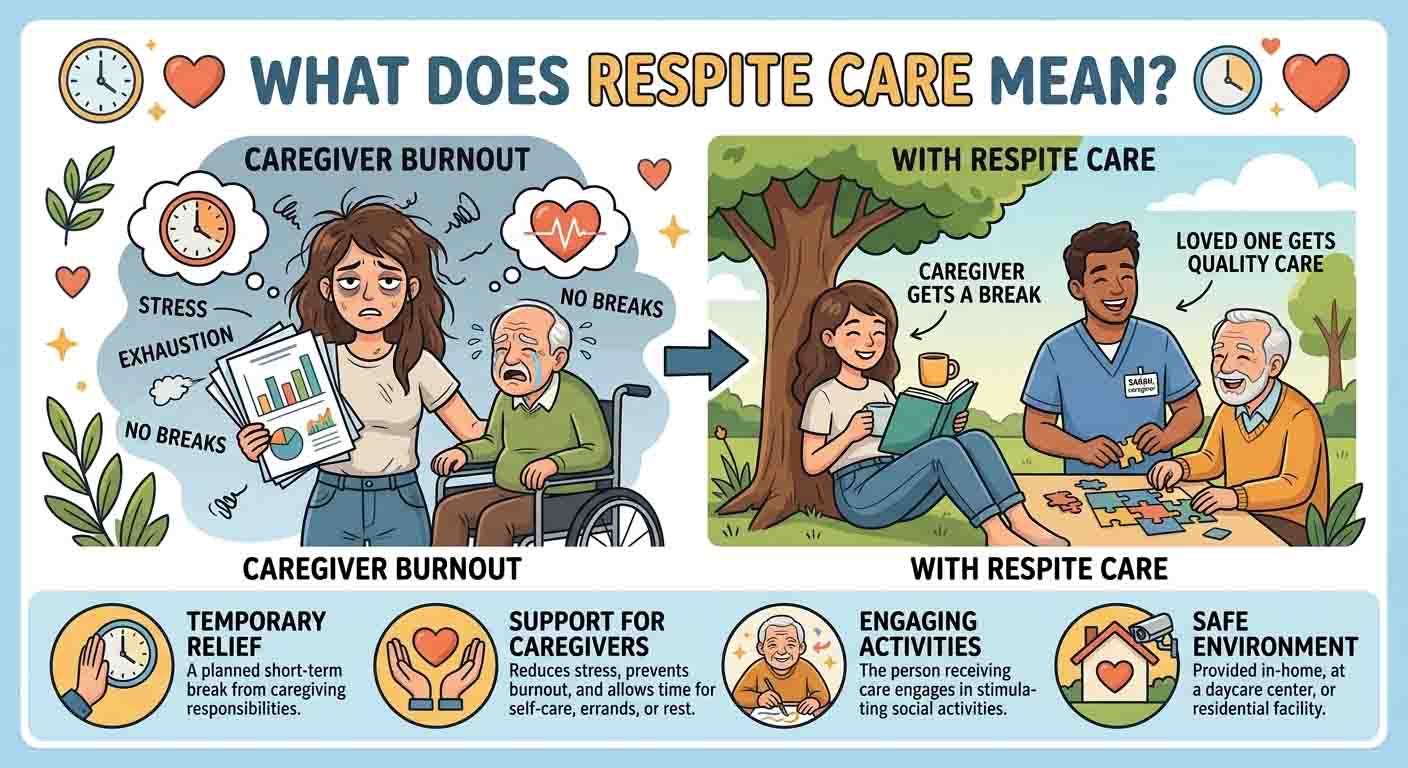
What does respite care mean? Respite care means temporary support provided to individuals who need assistance, allowing their regular caregivers to take a break. It can be short-term or emergency-based and delivered at home, in a facility, or through community programs, ensuring continuous care and reducing caregiver stress.

What Does Respite Care Mean?
What does respite care mean? Respite care refers to short-term or temporary care provided to individuals who require assistance, giving their primary caregivers time to rest or manage other responsibilities. It can last from a few hours to several weeks and is available in-home, in care facilities, or through community-based programs.
Definition of Respite Care Explained
What does respite care mean in simple terms? It means giving caregivers a planned or emergency break while ensuring the person receiving care continues to get proper support.
Respite care is commonly used for individuals with disabilities, elderly people, or those recovering from illness. It supports both the caregiver and the care recipient by maintaining a healthy balance between care and personal wellbeing.
Understanding Respite Care in Simple Terms
Caring for someone full-time can be physically and emotionally demanding. Over time, caregivers may feel overwhelmed or exhausted.
Respite care helps by:
- Providing temporary relief
- Ensuring uninterrupted care
- Supporting both mental and physical wellbeing
In simple words, it allows caregivers to recharge while maintaining high-quality care for their loved ones.
Types of Respite Care
Respite care is flexible and available in several forms depending on individual needs:
In-Home Respite Care
- A trained support worker comes to your home
- Maintains a familiar and comfortable environment
- Ideal for maintaining daily routines
Centre-Based Respite Care
- Provided in a professional care facility
- Includes structured activities and supervision
Short-Term Accommodation (STA)
- Temporary stays in a supported environment
- Includes meals, activities, and 24/7 support
If you’re looking for professional support, you can explore respite care services on the Sunshine Coast to find suitable options.
Emergency Respite Care
- Immediate support during unexpected situations
- Available when caregivers cannot provide care suddenly
Who Needs Respite Care?
Respite care is beneficial for:
- Individuals with disabilities
- Elderly people needing daily assistance
- People recovering from illness or surgery
- Families caring for loved ones full-time
It is especially important for caregivers who:
- Feel overwhelmed or stressed
- Need time for work or personal commitments
- Require rest to maintain their own health
Key Benefits of Respite Care
For Caregivers
- Reduces stress and prevents burnout
- Improves mental and physical health
- Provides time for personal responsibilities
For Care Recipients
- Encourages independence
- Provides social interaction
- Ensures consistent and professional care
How Long Can Respite Care Last?
Respite care duration varies based on needs:
| Type | Duration |
|---|
| Hourly respite | Few hours |
| Day respite | Full day |
| Short-term stays | Several days to weeks |
| Emergency respite | Immediate, short-term |
Respite Care in NDIS
Under the NDIS (National Disability Insurance Scheme), respite care is commonly referred to as Short Term Accommodation (STA).
It includes:
- Temporary accommodation
- Personal care support
- Meals and daily activities
NDIS respite care helps participants:
- Build independence
- Experience new environments
- Give families essential breaks
Learn more from the official NDIS website: https://www.ndis.gov.au/
Common Situations Where Respite Care is Needed
Respite care can be useful in many real-life situations:
- When caregivers need a break or vacation
- During medical appointments or emergencies
- For work or personal commitments
- During recovery after illness
- When additional support is needed temporarily
How to Choose the Right Respite Care
When selecting the right respite care service, consider the following:
Quality of Care
- Experienced and trained staff
- Personalized care plans
Environment
- Safe, clean, and comfortable setting
- Suitable for individual needs
Flexibility
- Availability for short-term or emergency care
Reputation
- Positive reviews and testimonials
Common Misconceptions About Respite Care
“It’s only for emergencies”
Respite care can be planned regularly
“It replaces family care”
It supports caregivers, not replaces them
“It’s only for elderly people”
It is suitable for people of all ages
Pros and Cons of Respite Care
Pros
- Reduces caregiver stress
- Improves overall care quality
- Provides social opportunities
Cons
- Adjustment period for new environments
- Availability may vary depending on location
Need Support or Guidance with Respite Care?
If you are exploring respite care options, getting expert advice can help you choose the right support for your situation.
Speak with a trusted provider today to:
- Understand your NDIS options
- Check availability
- Get personalised care support
Frequently Asked Questions
What is the main purpose of respite care?
Respite care provides temporary relief for caregivers while ensuring individuals continue receiving proper support and care.
Is respite care only short-term?
Yes, respite care is designed as temporary support, ranging from a few hours to several weeks depending on needs.
Can respite care be provided at home?
Yes, in-home respite care allows trained professionals to provide support in a familiar environment.
Who pays for respite care?
Funding may come from NDIS, private payments, or insurance, depending on eligibility.
Is respite care beneficial for people with disabilities?
Yes, it helps individuals build independence, socialize, and experience new environments safely.
Conclusion
Now you clearly understand what respite care means—it is a flexible, short-term support system designed to benefit both caregivers and individuals receiving care. By offering temporary relief, it ensures caregivers can recharge while maintaining high-quality care for their loved ones. Whether planned or emergency-based, respite care plays a vital role in improving wellbeing, independence, and quality of life.